Progressions in astrology: inner changes through the years
Secondary progressions follow the “1 day = 1 year” rule. Learn how they differ from transits, how to read the progressed Moon and Sun, and why astrologers use them in annual forecasts.
If transits show how the sky moves outside and knocks on your chart, then progressions are the inner movement of the chart itself. Secondary progressions are one of the most subtle and psychologically nuanced tools in astrology. Many practicing astrologers believe that a forecast is incomplete without progressions: transits speak about external circumstances, progressions speak about your internal readiness to live through them.
If you are new to astrology, this article explains what “1 day = 1 year” means, how to interpret the progressed Moon and Sun, how progressions differ from transits and why they are chosen for an in-depth yearly forecast.
What are progressions?
Progressions (from the Latin progressio, “advancement”) are a symbolic way to advance the natal chart in time. Unlike transits, which use the actual current positions of the planets, progressions take the positions of the planets shortly after your birth and interpret them as an unfolding of the natal chart.
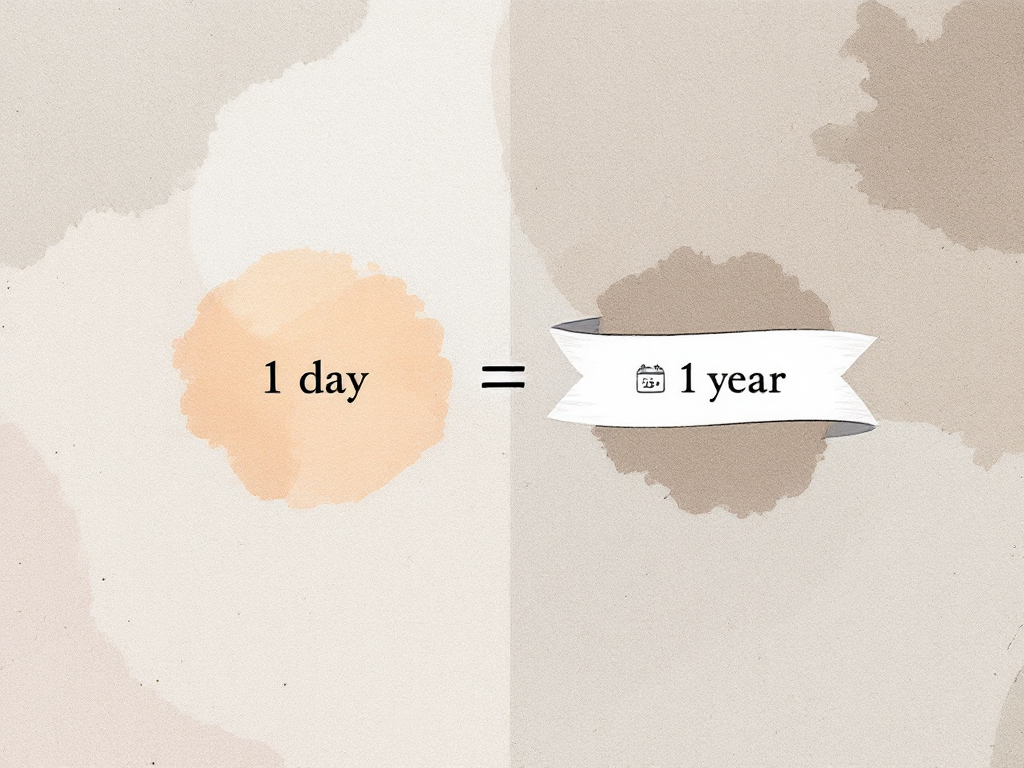
The most common technique is secondary progressions. The key formula is:
In other words, to calculate a person’s progressed chart for their 30th birthday, the astrologer takes the real sky chart on the 30th day after birth. The positions of the planets on that 30th day form the progressed chart for their 30th year of life.
Why exactly “1 day = 1 year”
This formula is not an arbitrary analogy. It has a long tradition reaching back to Ptolemy, who used similar symbolic shifts for prediction. Psychologically, the rule is also logical: the Sun’s apparent daily circuit around Earth symbolically corresponds to its annual cycle. A day becomes a small-scale analogue of a year.
There are other types of progressions:
- Tertiary progressions — 1 lunar month = 1 year.
- Minor progressions — 1 month = 1 year.
- Solar arcs — all planets move by the same amount by which the Sun moved during a “progressed” day.
But secondary progressions are the main tool in most schools. When an astrologer says “you have a progressed Moon in Sagittarius,” they almost always mean secondary progressions.
A transit asks: what is happening around me? A progression asks: what is happening within me?
History of the method
The idea of moving the chart symbolically originated in Hellenistic astrology. As early as the 2nd century CE, Ptolemy described techniques of symbolic direction in the Tetrabiblos; these later developed into systems of progressions and directions. In European astrology of the 15th–17th centuries (Regiomontanus, Placidus de Titis), the “1 day = 1 year” technique became established as a standard.
In the 20th century, progressions developed along several lines. Alexander Volgin (1903–1993), a Polish and later American astrologer, wrote about progressions and solar arcs. Noel Tyl (1936–2019), an American psychological astrologer, made progressions a central tool of his approach, where the chart is read as an unfolding life script.
Today, progressions are a standard part of an in-depth annual forecast, along with transits and the solar return chart.
How it works: mathematics and meaning
Technically, secondary progressions are calculated as follows:
- Start with your date of birth.
- Convert the number of years you want to examine into days after birth (for example, 30 years = 30 days).
- Calculate the actual positions of the planets on that new date, retaining the time and place of birth.
- Overlay this “advanced” chart on the natal chart.
This gives us a second layer: the natal chart describes “who you are from birth”; the progressed chart describes “who you are becoming in this year.”
Speeds of the progressed planets
Since a “progressed” day is equal to a year of life, the planets in progression “move” at different speeds relative to real human time:
- The progressed Moon is the fastest. It completes a full cycle in ~28 years, spending about 2.5 years in each sign and roughly the same time in each house.
- The progressed Sun — about 1° per year, that is, the sign changes approximately once every 30 years. Most people experience 2–3 progressed Sun sign changes in a lifetime.
- The progressed Mercury — close to the Sun, moving at a similar speed.
- The progressed Venus — also about 1° per year.
- The progressed Mars — slower, ~0.5° per year.
- Jupiter and the outer planets — so slow in progression that they change signs only for a few people (or do not change at all during their lifetime). Therefore, in work with progressions they are usually not used as independent “engines”, although aspects to them are still considered.
The progressed Moon is the main driver
The progressed Moon is perhaps the most informative single factor in the annual forecast. It moves through a sign in ~2.5 years and through one natal house in about the same time. The sign of the progressed Moon colors your emotional needs during this period; its house points to the area of life where those needs appear.
Themes of the progressed Moon by sign:
- Aries — the need for initiative, new beginnings, physical activity.
- Taurus — stability, settling in, sensual pleasures, financial base.
- Gemini — communication, learning, inner circle, curiosity.
- Cancer — home, family, emotional roots, care.
- Leo — self-expression, creativity, visibility, romance.
- Virgo — health, routine, putting things in order, skills, work.
- Libra — relationships, partnerships, aesthetics, balance.
- Scorpio — depth, crises, other people's resources, transformation.
- Sagittarius — expanding horizons, travel, learning, meaning.
- Capricorn — career, structure, responsibility, ambition.
- Aquarius — communities, friends, reforms, liberation.
- Pisces — solitude, spirituality, art, dreams, rest.
The progressed Sun — deep personal change
The progressed Sun moves about 1° per year. This means that in a lifetime it travels 80–90 degrees — about three signs. A sign change by the progressed Sun is a rare and important event; it feels like “I have outgrown my former self.”
If you were born with the Sun at the beginning of a sign, it may pass through 2–3 more signs during your life. If it was near the end, it may pass through as many as four (the first shift is already in early childhood). Each change colors an entire decade with a new style of self-expression.
Aspects between progressed and natal planets
A subtler layer appears when a progressed planet forms an aspect to a natal point. The progressed Moon in trine to natal Jupiter (an influence lasting about 3 months) may mark a period of expansion, good fortune and travel. The progressed Sun square to natal Saturn (significant for several years) may mark a prolonged test of maturity. Orbs in progressions are usually small (1–2°), but the effect is long-lasting.
Progressions are especially valuable because they show internal time. A transit may not “work” externally if you are not internally prepared for it. Progressions show this readiness: what matures in you and which part of you comes to the fore.
What progressions show you personally
Progressions work where transits are powerless: they describe internal transitions, which often have no obvious external markers, but change your life from the inside.
Progressions vs. transits — what is the difference?
| Transits | Progressions |
|---|---|
| Real movement of planets in the sky | Symbolic movement of the chart |
| Color external circumstances | Describe internal processes |
| Faster dynamics (days, weeks, years) | Slow deep shifts |
| Answer the question “what’s going on?” | Answer the question “who am I becoming?” |
A good annual forecast uses both layers: a transit is an “invitation from the world”; a progression is your inner readiness to accept this invitation. When a transit and a progression align thematically, an event may be experienced vividly and fruitfully. When they diverge, external circumstances may pull one way and inner processes another, creating tension.
When to examine progressions
- Once a year is standard for an in-depth annual forecast. Examine the progressed Moon, Sun, Venus, Mars and their aspects to the natal.
- Before a major decision — the progressed chart may suggest whether you are internally ready for this step or whether the decision is dictated by external pressure.
- At a change in life stage — the transition of the progressed Moon to a new sign (every 2.5 years) is an excellent marker to reconsider priorities.
- When the progressed Sun changes sign — once every ~30 years. This is a rare and important transition that deserves a separate analysis.
Typical scenarios
- Progressed Moon in the 10th house — 2–2.5 years, when internally you are ready for professional visibility, for a new professional role. External transits often bring opportunities at the same time.
- Progressed Sun changes sign — You may feel that an “old version” of yourself is behind you. This can be accompanied by a change of job, city or image.
- Progressed Venus conjuncts natal Mars — a period of active love interest, flirtation, passion.
- Progressed New Moon or Full Moon (conjunction or opposition of the progressed Moon and the progressed Sun) marks a major emotional cycle that happens several times in a lifetime.
Common myths and mistakes
Myth 1. “Progressions are the same as transits, only more complicated.” These are different layers. Transit is what comes from outside. Progression — what unfolds within. They work in parallel and complement each other.
Myth 2. “Progressions cannot work because they are symbolic, not the actual sky.” Astrologers have used this symbolic technique for centuries because they observe a correlation between the progressed chart and the psychological shifts in life. This is not “the sky influences you” — it is a symbolic model of your internal time.
Myth 3. “A ‘bad’ progressed aspect means a bad year.” A progressed aspect is a long-term internal process. A square between progressed Venus and Saturn is not “unhappy love”, but a theme of reconsidering values in relationships, which can end in a mature partnership or a mature choice to be alone — both options are good.
Myth 4. “Only professionals need progressions.” The basic technique — understanding the progressed Moon and Sun — is accessible and interesting to anyone. This is a great way to start seeing your life as an unfolding story rather than a series of random events.
Progressions particularly depend on an accurate birth time. A 4-minute error in birth time shifts the progressed chart by about 1° (about a year of life). If your birth time is uncertain, consider rectification or wider orbs.
On astronavi, progressions are calculated using the Swiss Ephemeris, adjusted for the exact birth parameters. The forecast for the year combines three layers: natal, transits and progressions — and reads them as one unfolding story in which the external and internal mutually support and reveal each other. If you want to see not just “what will happen,” but who you are becoming, explore your progressed chart on the practice page.
Questions and answers
What are progressions in astrology in simple terms?+
They are a symbolic way of moving your natal chart forward in time. The most common technique, secondary progressions, follows the rule “1 day after birth = 1 year of life” and describes how your inner life unfolds.
How do progressions differ from transits?+
Transits use the actual current positions of planets and describe external circumstances. Progressions symbolically advance the natal chart and describe inner processes and your readiness for change. A good forecast uses both layers.
How do I read the progressed Moon?+
The progressed Moon changes sign about every 2.5 years and moves through natal houses. Its sign describes the emotional needs of the period; its house points to the area of life where those needs are most apparent.
Can the progressed Sun change signs?+
Yes. It moves about 1° per year, so it changes signs approximately every 30 years. Most people experience 2–3 progressed Sun sign changes in a lifetime. Astrologers view these as deep shifts in personal identity.
How accurate must my birth time be for progressions?+
Very accurate. A 4-minute error in birth time shifts the progressed chart by about 1°, or about a year of life. If your birth time is uncertain, rectification or a larger orb may be appropriate.
Which progressions matter most in an annual forecast?+
The progressed Moon (sign, house and aspects), progressed Sun (especially a sign change), progressed Venus and Mars, and major aspects from progressed planets to natal and angular points.
Can progressions be used to predict specific events?+
Progressions are better at describing the inner development of a theme. Transits are more useful for estimating the dates of events. When a progression and transit align, the inner and outer processes may reinforce each other.
Ready to try Progressions for yourself?
Open this area in your dashboard for a reading based on your details.