Lunar return: the emotional tone of your month
A lunar return chart is calculated when the Moon returns to its natal degree. It describes the emotional background of the next 27–28 days.
The lunar return is one of astrology’s subtler forecasting techniques. While the solar return describes the broad annual cycle, a lunar return works with the rhythm of the month: mood, relationships, everyday life and small decisions. Psychological astrologers especially value this technique: it does not promise “events,” but describes the emotional background in which events are experienced. Its subtlety makes it easy to underestimate, even though it can be useful.
This article explains what a lunar return is, how the method developed, how a lunar return chart is read, how it differs from a solar return, and why it makes sense to look at it every month. We will focus on astrological mechanics and practical use without mystifying the method.
What is a lunar return?
A lunar return (the return of the Moon) is a chart built for the exact moment when the transiting Moon returns to the degree, minute and second of your natal Moon. This happens approximately once every 27 days, 7 hours and 43 minutes — this is the sidereal lunar month, during which the Moon completes a circuit of the zodiac relative to the stars.
The chart is calculated for this moment, usually at your actual location. The result is a complete chart: with its own Ascendant, houses, aspects of the planets to the Moon and to each other. It applies until the next Moon return, rather than for a year or a week — about 27–28 days.
It helps to clarify what a lunar return is not. It is not a set of transits to the natal chart — that is, it does not answer the question “what is activating my natal planets now?” Nor is it a general lunar calendar, which is the same for everyone. A lunar return is your personal chart for the month, based on a specific astronomical event in your life: the return of the luminary to its starting point.
History of the method
The method of returns (solar, lunar, planetary returns) dates back to Hellenistic astrology — to authors like Vettius Valens (2nd century CE), who described the annual and monthly “updates” of the horoscope. In the Arab period, the idea passed into the works of Abu Ma’shar and Al-Biruni, where the solar return was already used as an independent forecasting technique.
The lunar return acquired its modern form in the 20th century. In works from the 1930s–1950s, the French astrologer Alexander Volgin systematized the solar return technique; his school also used lunar returns as a “monthly breath” within the year. Later, the British astrological school — in particular, Liz Greene and her colleagues at the Centre for Psychological Astrology — added a psychological interpretation: the lunar return came to describe an emotional task for the next cycle, not just “events of the month.”
A forecast is not a prediction of what will happen, but a description of the internal landscape in which a decision will be made.
Today, lunar returns are used in several modern astrological traditions alongside natal charts, transits and solar returns.
How it works technically
To calculate a lunar return, you need three things: the exact position of the natal Moon (and therefore the exact time of your birth), the ephemeris for the year in question and the place where you will be at the time of return.
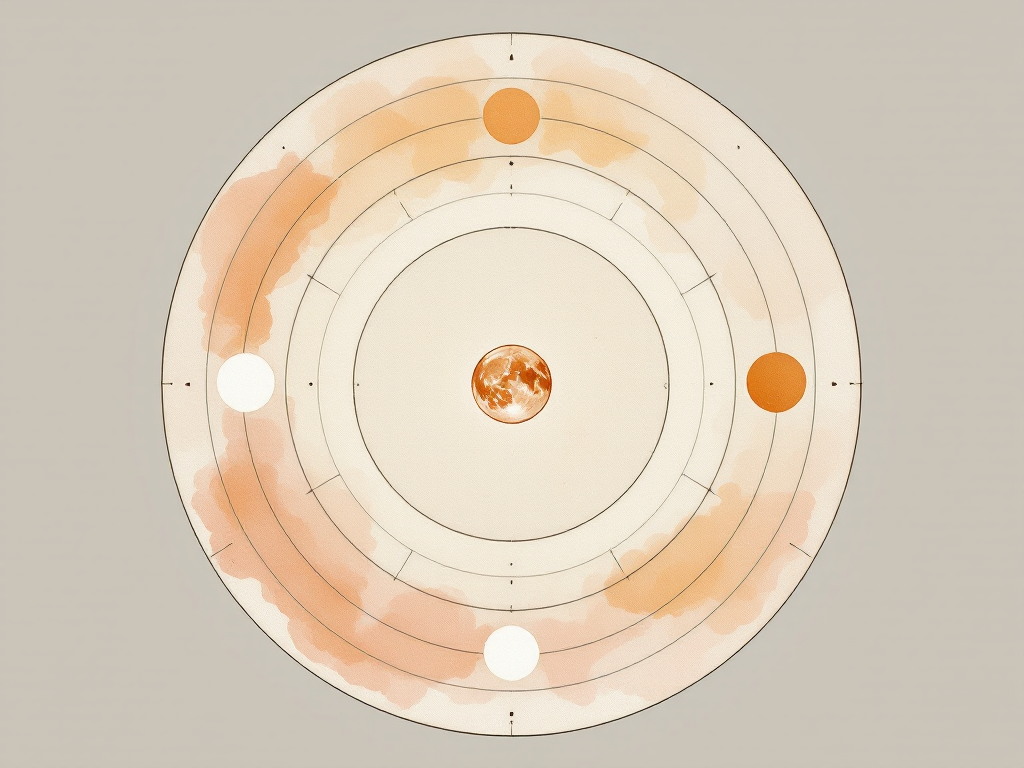
The calculation proceeds as follows:
- The natal position of the Moon is taken — for example, 14°22′ Taurus.
- From the ephemeris, we find the moment when the transiting Moon will next be exactly at 14°22′ Taurus.
- At that moment, a chart is drawn as though it were a new birth — with its own ASC, MC, houses and aspects.
- Location is where you actually are. If you are on a business trip to another city at the time of return, the lunar return chart is calculated for that city: the houses and ASC will change.
A lunar return is sensitive to the accuracy of the time of birth. An error of 5 minutes in natal time can shift the lunar return ASC by 1–2 degrees, and sometimes by a sign. If your birth time is unknown or approximate, ask an astrologer to make a rectification or start with charts calculated for noon: they may describe the general background, but not the houses reliably.
On astronavi, a lunar return is calculated using the Swiss Ephemeris — this is the same astronomical engine used in many professional astrology programs. The positions of the luminaries are calculated to fractions of an arcsecond.
What a lunar return shows you
The lunar return chart is read using the same principles as the natal chart, but adjusted for its “monthly nature.” Here are the key elements.
Lunar return ascendant
ASC is the main marker of the month. It shows what style of self-presentation may feel natural over these 27 days: the tone with which you approach new situations, how others may perceive you. A lunar return with Aries on the ASC is a month of direct requests and quick decisions. A lunar return with Pisces on the ASC is a month of softness, a dreamlike mood, and increased impressionability.
Lunar return houses
The houses show which areas of life may draw your attention this month. This does not mean that nothing will happen in other areas — your attention and emotional involvement may simply be distributed unevenly.
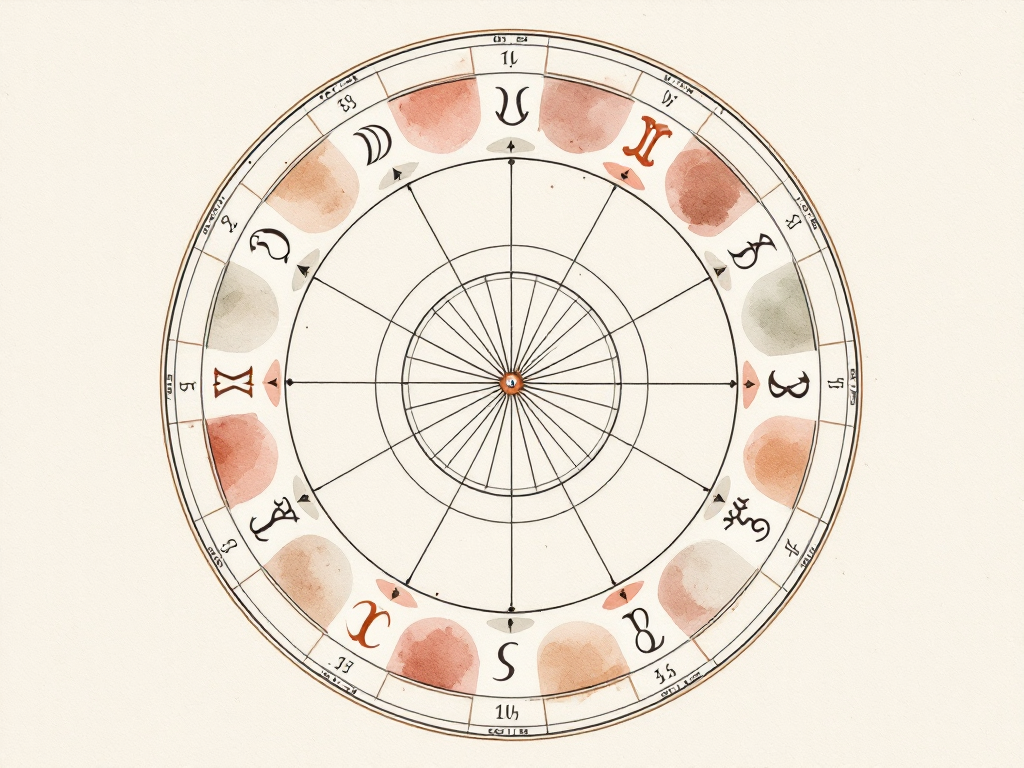
- Moon in the 1st house of the lunar return — a month of increased sensitivity and visibility. Emotions are close to the surface and are easily read by others.
- Moon in the 4th house — focus on home, family, roots. Withdrawal into oneself, a desire to retreat.
- Moon in the 7th house — a month about relationships and partnerships. This may include business as well as romantic relationships.
- Moon in the 10th house — a public month. Your emotional state may be more visible to others.
- Stellium in one house (3+ planets) — the sphere of this house will be the main theme of the month.
Aspects to the lunar return Moon
The most important thing is the aspects that the lunar return Moon forms with other planets in the chart. They describe the quality of the emotional background.
- Moon–Venus in a harmonious aspect: a warm, friendly month, easy relationships, desire for beauty and comfort.
- Moon–Mars in a tense aspect: irritability, a short temper, frequent minor conflicts.
- Moon–Saturn: melancholic, emotionally difficult month, but good for discipline and solo work.
- Moon–Uranus: emotional swings, surprises, desire for freedom and disruption of routine.
Comparison with natal chart
Experienced astrologers overlay the lunar return chart on the natal chart: they look at which natal house the lunar return ASC falls into, which natal planets are activated by the houses of the return chart. This gives a double layer: “what is happening in your life overall” + “how it is colored this month.”
Lunar return vs. solar return: what's the difference
These are two popular return techniques and are often confused.
| Parameter | Solar return | Lunar return |
|---|---|---|
| Duration | ~365 days | ~27.3 days |
| Return | Sun to natal degree | Moon to natal degree |
| Depth | Year: major themes, direction | Month: background, mood, small decisions |
| Level | Strategic | Tactical |
| Sensitivity to location | Very high (relocation) | Moderate |
The two return charts complement each other: the solar return sets the year’s story — the lunar return shows how this story will be experienced emotionally in each of the ~13 monthly episodes.
Common myths
Myth 1: “A lunar return predicts events.” No. It describes the emotional background and focus of attention. Events come from transits, progressions and actual decisions of a person. It answers “in what mood might I meet it?” rather than “what will happen?”
Myth 2: “If the lunar is bad, the month will be bad.” There are no inherently “bad” lunar returns. There are complex ones — with intense aspects of the Moon to Saturn or Pluto. But it is precisely these months that often turn out to be the most productive for deep inner work. An easy lunar return doesn't mean a happy month — sometimes it's just a quiet month.
Myth 3: “A lunar return must fall on your birthday.” No, a lunar return is not tied to a calendar date. It is tied to the astronomical moment of the return of the Moon, which shifts every month to different dates.
Myth 4: “Moving to another city can ‘improve’ a lunar return.” Technically, yes — the place of calculation changes the houses and the lunar return ASC. This is called lunar relocation. But this is a working technique only if you actually live or work in this place on the day of return. Flying in for an hour and leaving again does not amount to living there.
Who may find lunar returns useful?
Lunar returns may be especially useful to people who work consciously with emotions: psychotherapists, coaches and people who keep reflective journals. It helps not to resist the state that has already arrived, but to understand its pattern and use it.
If the coming month’s lunar return has the Moon in the 8th house, the focus may shift to deep topics: control, trust, shared finances, shadow. This is neither “good” nor “bad” — it is an invitation to plan less public activity and more inner work for the month.
On astronavi, a lunar return can be calculated for any past or future month. The chart is calculated at the exact moment of the return of the Moon using the Swiss Ephemeris, with analysis of the ASC, houses, aspects of the Moon and comparison with your natal chart. If you are new to forecasting, start with a lunar return for the current month: this is one of the gentlest and quickest ways to feel how the “rhythm of the sky” relates to everyday life.
Questions and answers
How often does a lunar return happen?+
About once per sidereal lunar month: approximately every 27 days, 7 hours and 43 minutes. That makes about 13 lunar returns per calendar year.
How does a lunar return differ from a solar return?+
A solar return happens once a year and describes the year’s main themes and direction. A lunar return happens about every 27 days and describes the month’s emotional background and focus. They are complementary layers of a forecast.
Do I need an exact birth time for a lunar return?+
Preferably. Birth-time accuracy affects the natal Moon position, the moment of its return and the lunar return houses. A 5-minute error may shift the return chart’s ascendant by 1–2 degrees. Without an exact time, the chart can still be calculated, but its houses may be inaccurate.
Does my location affect my lunar return?+
Yes. The chart is calculated for the city where you are when the Moon returns. If you are in another city, its houses and ascendant change, though the planetary positions do not.
Can a lunar return predict specific events?+
No. It describes the month’s emotional background and focus rather than specific events. For event forecasting, astrologers also use transits, progressions and directions to the natal chart.
What should I do if my lunar return looks difficult?+
There are no inherently “bad” lunar returns. Tense Moon aspects to Saturn, Mars or Pluto may describe a month of inner work and mature decisions. It can help to plan with that emotional background in mind: less public activity, more rest and focused work.
Are lunar returns only for women?+
No. In astrology the Moon is associated with emotions, habits and the need for security, regardless of gender. A lunar return can be read for anyone’s natal chart.
Ready to try Lunar return for yourself?
Open this area in your dashboard for a reading based on your details.