Chakra of the Day: which energy is in focus today and how to work with it
Explore seven chakras in Indian traditions: their Sanskrit names, colors, locations and symbolism. Use a Chakra of the Day as a prompt for meditation and reflection, without promises of healing.
Chakras are neither organs nor “health nodes.” They offer a symbolic map of inner experience: seven points for talking about the body, feelings, voice, intuition and connection to something larger. “Chakra of the Day” is a gentle practice: one center, one affirmation, one simple exercise to start the day more consciously. Here is what the system describes, where it came from, how to use it, and where its limits lie.
What are chakras and the Chakra of the Day?
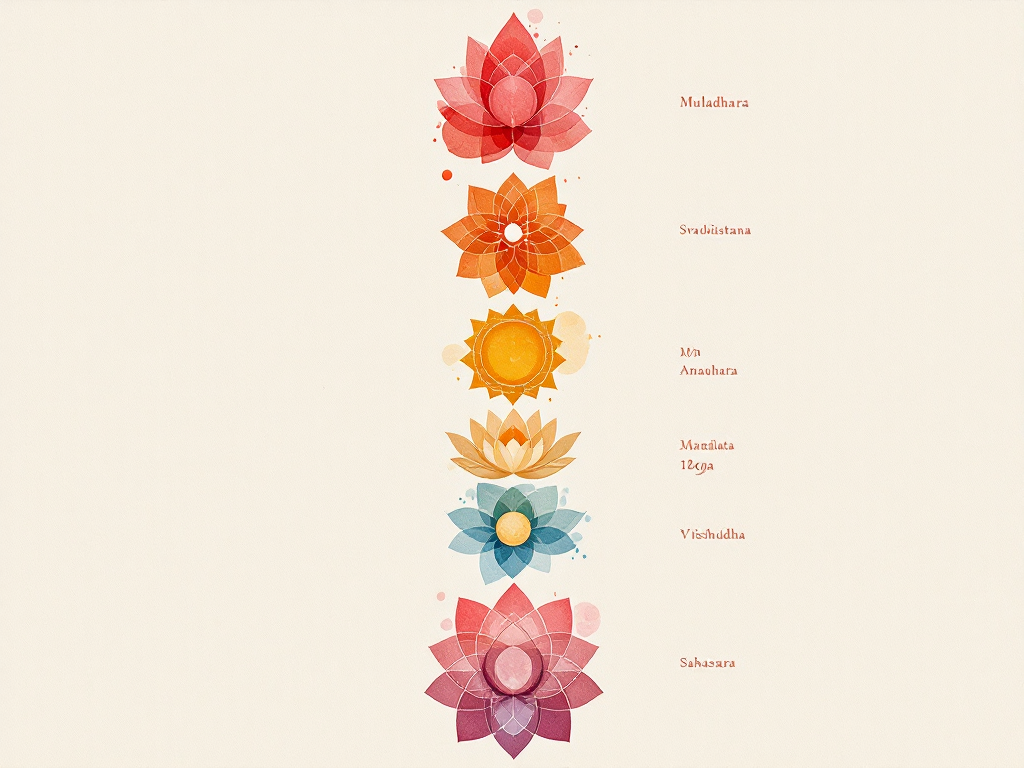
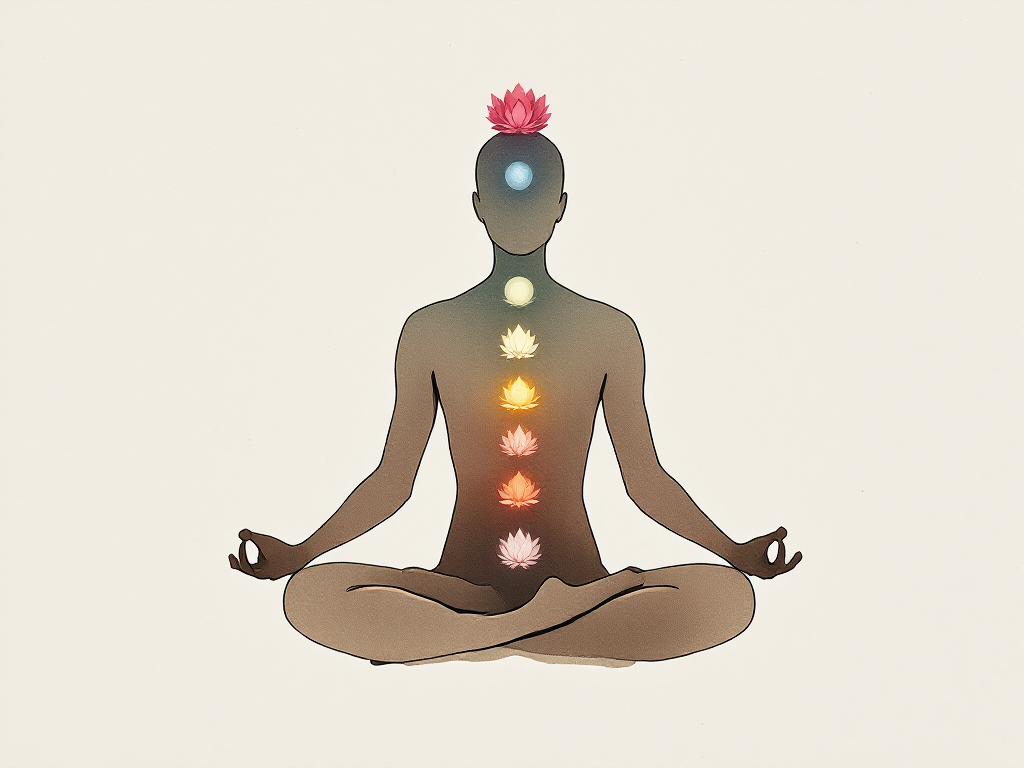
In the classical yoga tradition, chakra (Sanskrit: चक्र, “wheel”, “disc”) is a symbolic center in a person’s subtle body. The number of chakras differs in different schools, but in the modern popular system there are seven main ones:
| No. | Sanskrit name | Location | Color | Symbolism |
|---|---|---|---|---|
| 1 | Muladhara (Mūlādhāra) | Base of the spine | Red | Support, security, basic trust in the world |
| 2 | Svadhisthana (Svādhiṣṭhāna) | Lower abdomen | Orange | Sensuality, pleasure, creativity |
| 3 | Manipura (Maṇipūra) | Solar plexus | Yellow | Will, sense of self, personal power |
| 4 | Anāhata | Center of chest | Green | Love, compassion, acceptance |
| 5 | Vishuddha (Viśuddha) | Throat | Blue | Voice, honesty, expression |
| 6 | Ajna (Ājñā) | Brow | Indigo | Intuition, perception, third eye |
| 7 | Sahasrara (Sahasrāra) | Top of the head | Purple/White | Connection to something larger, awareness |
The Chakra of the Day is a short practice in which you focus on one of seven centers each day. Choose a chakra in the morning (rotate through all seven over a week or choose at random), then keep its theme in mind throughout the day: “today I will notice support,” “today I will use my voice,” or “today I will practice compassion.” That gives your attention a simple structure.
Chakras are a symbolic, meditative system, not a medical chart. A “closed chakra” is not a diagnosis, and an “open” one is not a cure. If you have health problems, consult a doctor. The Chakra of the Day is a reflection tool, not alternative medicine.
History: from the Yoga Sutras to the 19th-century West
Chakras as a concept took shape in the Indian tantric tradition during the first millennium CE - in the texts of the Shaiva, Shakta and Natha schools. But the roots of the idea of internal centers can be traced earlier - in the Upanishads (8th–3rd centuries BCE) and in earlier layers of Vedic literature.
The Yoga Sutras of Patanjali (c. 2nd century BCE–4th century CE) are often mentioned as one of the sources. This is not entirely accurate: the sutras use the term “chakra”, but without the detailed seven-chakra system that is now known in the West. The system of “seven chakras with colors” in its recognizable form was formalized much later - in texts like Shat-chakra-nirupana (16th century, by Purnananda), which describes six main chakras and the seventh - Sahasrara - above the crown.
Chakras came to the West at the late 19th century in two ways:
- The Theosophical Society (founded in 1875 by Helena Blavatsky and Henry Olcott) actively published Indian and Tibetan texts in European translations. Charles Leadbeater, in The Chakras (1927), offered an early widely read Western description of the system - with colors and diagrams. Many modern ideas about chakras derive from Leadbeater rather than Indian primary sources.
- Translation of the Shat-chakra-nirupana by Arthur Avalon (pseudonym of Sir John Woodroffe) in 1919 under the title The Serpent Power. Scholars still cite this carefully researched translation.
By the end of the 20th century, chakras became part of global wellness culture—sometimes losing the nuances of the original tradition. Therefore, it is important to remember: “seven chakras with rainbow colors” is largely a Western synthetic model, and in India itself the number and location of chakras vary among different schools.
Chakras are not physical organs. They are centers of psychic power through which the mind becomes aware of different aspects of experience.
How it works: seven centers and simple practices
It's helpful to think of the chakras as seven themes through which you can view your day. Below are a short description, an affirmation and a one-minute practice for each center. All of these are symbolic exercises for attention, not “energy healing.”
1. Muladhara — root chakra
- Theme: support, security, basic trust, body.
- When in focus: before important decisions, when you feel as if the ground is disappearing beneath your feet, in new places.
- Affirmation: “I am here. I have support."
- Practice (1 minute): Stand barefoot, feel the contact of your feet with the floor. Take 5 slow breaths, letting your weight settle more fully into your feet with each exhale.
2. Svadhisthana — sacral chakra
- Theme: sensuality, pleasure, creative energy.
- When in focus: when everything feels dull, on days without inspiration, when you feel you should not allow yourself joy.
- Affirmation: “I allow myself pleasure.”
- Practice: do one thing today for pleasure rather than productivity. A cup of tea, a walk, music. No guilt.
3. Manipura — solar plexus chakra
- Theme: will, sense of self, personal power.
- When in focus: before a difficult conversation, when you feel you have no right to speak or act.
- Affirmation: “I can act, and my ‘no’ matters.”
- Practice: write one “no” that you have been wanting to say for a long time. You do not have to say it aloud; seeing it written down is enough.
4. Anahata — heart chakra
- Theme: love, compassion, acceptance - for yourself and others.
- When in focus: on days marked by resentment, after a quarrel, during self-criticism.
- Affirmation: “I stand by myself.”
- Practice: put your palm on your chest, close your eyes, say “thank you” to yourself - not to the Universe, but specifically to your body for carrying you through today.
5. Vishuddha — throat chakra
- Theme: voice, honesty, self-expression.
- When in focus: when you have been silent about important things for a long time; before speaking in public.
- Affirmation: “My voice deserves to be heard.”
- Practice: Record a 30-second voice note to yourself about how you feel today. You do not need to send it.
6. Ajna — third-eye chakra
- Theme: intuition, perception, the ability to see the whole picture.
- When in focus: during information overload, before an important choice.
- Affirmation: “I trust what I see.”
- Practice: Close your eyes for 1 minute. You do not need to meditate; simply pause your visual input. Notice how busy your visual field had been.
7. Sahasrara — crown chakra
- Theme: connection with something more than everyday life; awareness.
- When in focus: on days when everyday concerns feel too small, or, conversely, at a moment of gratitude.
- Affirmation: “I am part of something bigger.”
- Practice: go outside, look at the sky for 30 seconds. No phone.
What the Chakra of the Day can show you
The chakra of the day is a framework for attention. During a week of practice, you get seven different lenses through which you can look at the same events:
- A theme out of balance. If, while focusing on Anahata, you notice that you criticize yourself all day - this is not a “closed heart chakra”, this is a signal that the inner critic is loud, and it’s worth slowing down. The chakra is a prompt to notice, not a diagnosis.
- The ignored side of life. If, while focusing on Svadhisthana, you realize that you don’t remember the last time you did something “just for its own sake” - this is not a “chakra disease”, it is a matter of priorities.
- The voice you have not used. Vishuddha often highlights topics in which you have been silent for a long time. You do not have to speak immediately; first, acknowledge what you want to say.
- Return to the body. Muladhara and Manipura remind you that you are more than your thoughts. Giving your body attention one day a week may be a gentle way to notice early signs of burnout.
The main value of the practice is not to “strengthen the chakras,” but to get seven regular prompts for self-reflection. In a month, you will have 30 short notes: what was alive, what was silent, what was repeated. Those notes give you material for reflecting on your experience.
Myths and limitations
Myth 1: “Opening the chakra means being cured.” No. Chakras are a symbolic system, not a physiological one. Opening/closing centers does not cure any medical disease. If you have anxiety, depression, or chronic pain, consult a doctor or therapist. Chakra practice may complement therapy, but not a replacement.
Myth 2: “If you feel bad, it means the chakra is blocked.” This is a convenient but risky explanation: it shifts responsibility for poor health from real causes (lack of sleep, overload, relationships, medical conditions) to an abstract “energy block.” Address concrete causes first, then return to symbolic work.
Myth 3: “Chakras can be “opened” by stones, essential oils, special sounds.” Stones and oils are pleasant sensory triggers. They work as an anchor for attention, but there is no reliable evidence that they affect “energy centers”. If you like it, use it as ritual aesthetics, not as medicine.
Myth 4: “There are exactly 7 chakras.” The seven-chakra system is a late Western simplification. Different tantric schools call from 4 to 12 centers; Some diagrams include additional chakras (feet, palms, under the heart). Seven is a convenient popular model, not a dogma.
If during practice you begin to feel anxiety, obsessive thoughts, or spend more and more time “diagnosing the chakras,” this is a signal to stop. Any meditation practice should be calming, not distressing.
In astronavi, the Chakra of the Day is simple: one center per day, one affirmation, one micro-exercise for 1 minute and a couple of questions for the diary - without promises to “heal” and without complex schemes. If you are just getting acquainted with the system, this is a soft entry; if you are already practicing - a brief daily prompt.
Want to try it today? Open the Chakra of the Day section - see which center is currently in focus, and check whether its theme resonates with your day.
Questions and answers
How many chakras does a person have?+
The popular modern system names seven main centers: Muladhara (root), Svadhisthana (lower abdomen), Manipura (solar plexus), Anahata (chest), Vishuddha (throat), Ajna (brow) and Sahasrara (crown). Indian tantric schools describe different numbers of chakras; the seven-center arrangement is a popularized Western model.
Are chakras physical organs?+
No. Chakras form a symbolic, meditative system rather than a physiological structure. They cannot be seen on an MRI or measured by sensors. They serve as a map of inner experience: body, feelings, voice and intuition.
How can I tell which chakra is “closed”?+
It is more useful to ask which theme needs attention than to label a chakra “closed.” If you have not spoken up for a long time, you might reflect on the theme of Vishuddha. If you feel you lack support, consider Muladhara. This is a prompt for reflection, not a diagnosis.
Can chakra practice cure an illness?+
No. Chakra practice cannot replace medical care. If you have symptoms of illness, anxiety, depression or chronic pain, consult a doctor. Meditation may be a helpful addition, never an alternative to treatment.
Where did the seven-chakra system come from?+
Chakra concepts took shape in Indian tantric texts during the first millennium CE. The modern presentation of seven chakras and their colors drew on 16th-century works such as *Shat-chakra-nirupana* and was popularized in the West in the late 19th and early 20th centuries by the Theosophical Society and Arthur Avalon’s 1919 translation *The Serpent Power*.
How long does the Chakra of the Day practice take?+
Allow 1–5 minutes a day. In the morning, choose a chakra with a theme, affirmation and brief exercise. Keep that theme in mind during the day. If you wish, write 2–3 sentences in a journal that evening.
Which chakra should I start with?+
Start with Muladhara, the root chakra. Its themes of support and safety form a foundation; work with the “upper” chakras can feel harder without it. Then move upward, one center per day, noticing which themes resonate most.
Ready to try Chakra of the day for yourself?
Open this area in your dashboard for a reading based on your details.